"I want a thoughtful plan," Holly Reed told KUT in late October. She sits on the boards of both the West Austin Neighborhood Group and The Muny Conservancy, and she has spent years working to keep Lions Municipal Golf Course public. She was talking about the deal the City announced on October 14. The deal would preserve the course, and it also covers the land on both sides of Lake Austin Boulevard that wraps around the course.
The golf course is the part that is close to settled. The rest is where the long-term change is. The same agreement would rewrite how the University of Texas may build on about 190 acres next to the course, and the detailed rules get drafted between now and spring 2027.
What the City Gets, and When
The City's October 14 announcement said Austin is "in discussions" with UT to take ownership of Muny. The deal would be done through amendments to the 1989 Brackenridge Development Agreement, which governs how UT may use its land along Lake Austin Boulevard. Mayor Kirk Watson said in the release that the community "has been working for more than 50 years to save Muny."
That is a long time to keep a course going on borrowed land. UT owns the 141 acres and leases them to the City month to month, Austin Current reported. Yet Muny is the most used public course in Austin, with more than 75,000 rounds a year. In 1950 it became the first public golf course in the South to integrate, and it is listed on the National Register of Historic Places as a civil rights landmark.
The money comes from private donors. The Austin American-Statesman reported that anonymous donors have proposed a substantial gift to UT that makes the transfer possible, and that the amount has not been made public. Community Impact reported that the 155 acres of Muny and the West Austin Youth Association campus together are appraised at more than $680 million. That is an appraisal of the combined land, not a sale price. Under the proposal, the WAYA campus would go to the youth sports nonprofit.
The approval process runs well into 2027. Here is the schedule from the City staff presentation:
- October 21 and 27, 2026: Staff briefed the Environmental Commission and then the Planning Commission. Both dates have passed.
- November 19, 2026: City Council considers the amended agreement.
- November 2026: The UT Board of Regents considers it separately.
- Spring 2027: Right-of-way vacations are finalized, the Mueller ground lease is amended, a regulating plan and a tax increment reinvestment zone financing plan are drafted and voted on, and Muny is conveyed to the City.
Title to the course is the last item on that list. Both votes are still ahead as this goes up, and Muny would not belong to the City until the land-use rules around it are adopted.
The Rulebook for the Other 190 Acres
According to Community Impact, the university hasn't determined any development plans for its remaining land yet. The same report describes the possible uses as residential and retail. So the best guide to what could be built is the set of standards in the terms the City presented to the Environmental Commission:
Standard | Proposed term |
|---|---|
Area covered | 190.26 acres |
Floor-area ratio, whole area | 0.6:1 |
Floor-area ratio, single site | Can exceed 0.6:1, capped at 5:1 unless Council approves more through rezoning |
Overall impervious cover | 75% |
Per-site impervious cover | Up to 85% |
Per-site building coverage | Up to 75% |
Lady Bird Lake setback | 200 feet, kept from the current agreement |
Multifamily density cap | Current 22-units-per-acre limit removed |
The low overall ratio and the high per-site cap fit together. The terms note that setbacks from the river, a tributary and Lake Austin Boulevard leave less buildable land than the full 190 acres, so individual sites can go denser than the average. The terms also say plainly that sites developed later may get less floor area, or none at all, once the overall limit is used up. That makes the order of construction important. The first projects to be built will use up part of the shared allowance.
Austin Current also reported that the new agreement would add heritage tree protections and water quality and drainage requirements, and that the staff briefing proposed a 50-foot setback on each side of a minor waterway.
Two Height Limits on the Same Boulevard
The public summary gives 65 feet "when viewed from Lake Austin Boulevard." The detailed terms set two limits. Buildings along the boulevard or north of it top out at 65 feet. Buildings south of the boulevard that do not front it can reach 105 feet. Both limits allow the City's standard height-limit exception, and compatibility rules apply only on the north side.
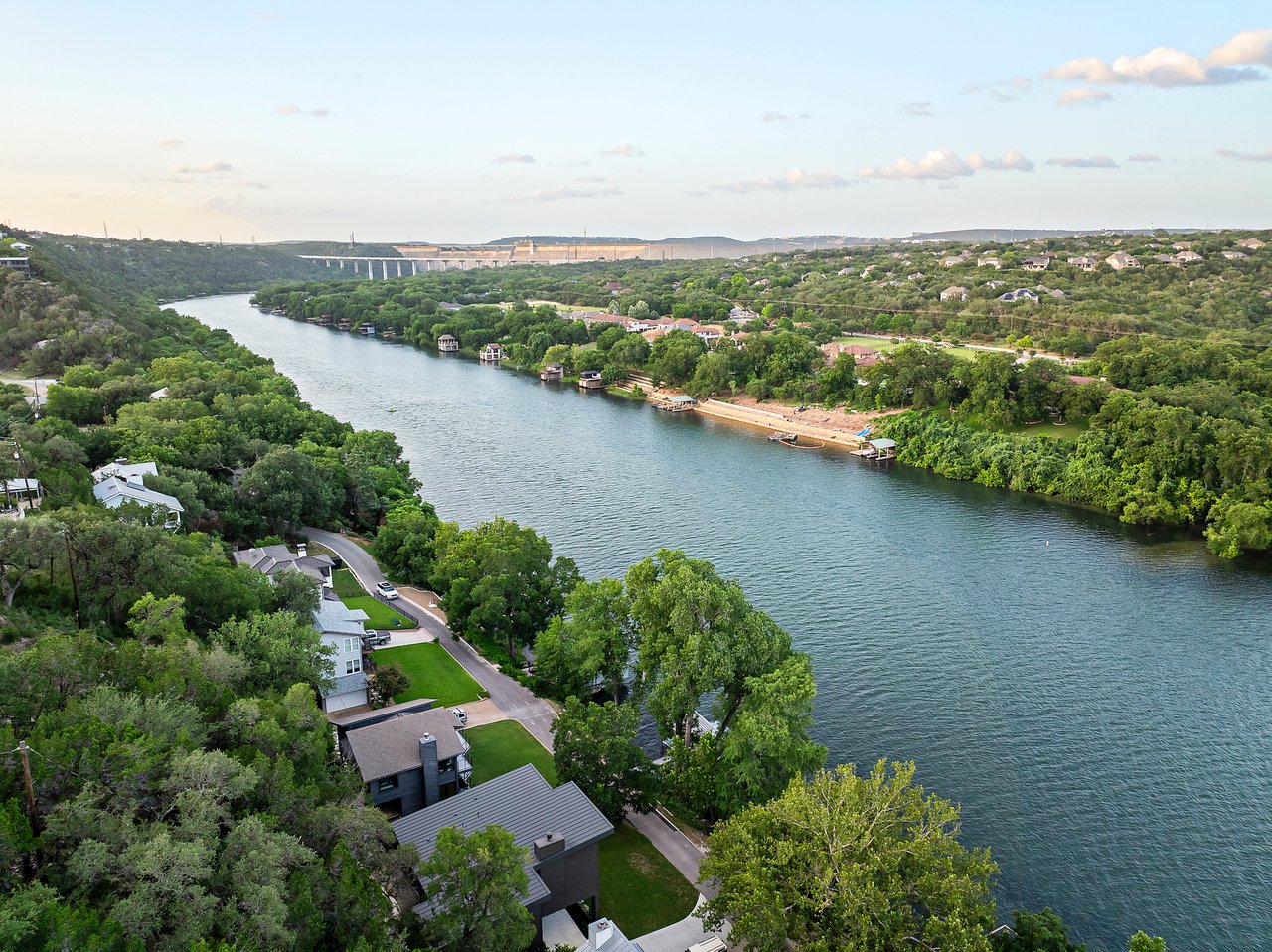
So the tallest buildings allowed under the proposal would sit between the boulevard and Lady Bird Lake, set back from the road and behind the 200-foot lake setback. North of the boulevard, toward Tarrytown's streets, the limit is lower and the compatibility rules that protect neighboring homes still apply. The boulevard itself becomes the line where the height limit changes.
Watson described what he hopes the rewrite will achieve. In a newsletter quoted by Austin Current, he wrote that it would better ensure development "provides housing, retail amenities for the neighborhood, height limits, setbacks from the lake, open space, and density provisions, while also sustaining a commitment to affordable housing."
The Lab Inside the Deal's Boundaries
The 82-acre Brackenridge Field Laboratory sits on land the new agreement would govern. The terms do not promise to keep it, move it or transfer it. Several of its researchers spoke at the October 21 Environmental Commission meeting.
Austin Current reported that the lab has nine greenhouses and an 18,000-square-foot lab building. Research scientist Liz Bowman told the commission that the land supports 700 plant species and 160 bird species, and that losing the lab and its work would be immense. Edward LeBrun, who works there, put it this way: "Anything that's done to this land cannot be undone, and it should not be rushed."
Reed is also on the neighborhood working group studying the plan. Her concern at the same meeting was about information. "We need more information from the university and the city on how the proposed new development will impact traffic and the environment," she said, according to Austin Current.
Not every Muny supporter sees it that way. Ken Tiemann of the Save Historic Muny District called the news of the plan "a miracle," the Statesman reported. His group endorsed the proposal, according to Community Impact. He told Austin Current he has "complete confidence that UT is going to do something fabulous with the remainder of the land." Ben Crenshaw, co-chair of the Conservancy, urged supporters to keep advocating until the deal is final.
Who Pays for the Pipes
The financing explains why the course and the development rules come as one package. Under the current Brackenridge agreement, the City has to pay for water, sewer and other infrastructure on UT's tract. To cover that, the City wants a tax increment reinvestment zone, which would pay for infrastructure from taxes on non-university development, Austin Current explained. According to the staff presentation, the zone would fund projects such as water and wastewater lines, drainage and sidewalks, and the costs and timing are still being worked out.
In other words, new development on the tract is what pays for its own infrastructure. The terms also create a local government corporation. The City's affordable housing policy for these zones applies, but the affordable housing does not have to be built inside the zone.
The deal also reaches beyond West Austin. UT would replace its existing affordable student housing, though not necessarily within the Brackenridge area. Its lease at Mueller would be amended to allow residential use, childcare and other uses that support students, staff and faculty. Some City rights-of-way would be vacated where that is feasible and safe, with UT paying to move the utilities.
At the Pro Shop, Nothing Has Changed
For golfers, this November runs on the same rules as any other month. The City's Lions Municipal page still says weekday tee times open online at 9 a.m., seven days ahead. Weekend times open online only at 8 p.m. the Monday before, and the pro shop phone line, (512) 978-6869, takes weekend calls starting Tuesday. The course closes for maintenance on the third Monday of each month, holidays and major tournaments aside. This month that falls on November 16, three days before the Council vote. The City runs the course under its current lease until the conveyance in spring 2027.
The Conservancy has longer-range plans of its own, separate from the deal. They include restoring the course with Coore & Crenshaw and building a teaching center that recognizes Muny's integration history. Those are the Conservancy's plans and are not part of the agreement going to Council. The City's Brackenridge Tract page still lists November 19 as the date of Council consideration.
If you own property north of the boulevard, or you're thinking about how the land from Muny to the lake could change over the next decade, Susan is following the vote on November 19 and the spring 2027 regulating plan. Susan Barringer is glad to talk it over privately whenever you're ready.